

General Dentistry
TMJ Treatment in Charleston, SC
Care for jaw pain, headaches and bite problems.
Jaw pain, clicking or popping when you open your mouth, and frequent headaches can all point to TMJ disorder (TMD). Dr. Paolo Incampo, DMD, offers customized treatment to ease discomfort, restore jaw function and protect your oral health.
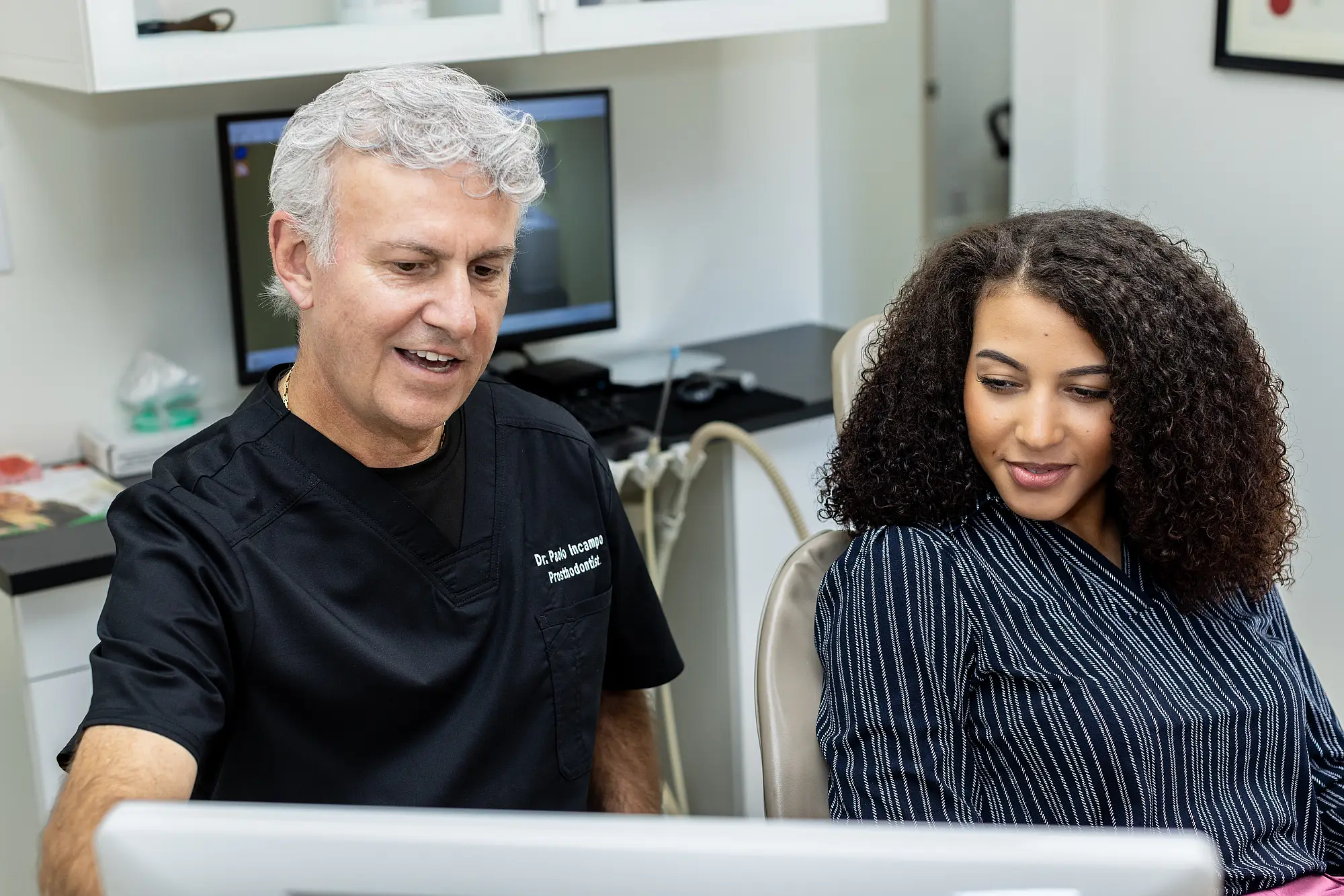
Replace missing teeth. Rebuild your smile.
What is TMJ disorder?
The temporomandibular joints (TMJ) connect your lower jaw to your skull and allow everyday movements like chewing and speaking. When these joints or the muscles around them become strained, the result can be TMJ disorder, with pain, tension and limited movement. Common causes include grinding or clenching the teeth, a misaligned bite, stress-related jaw tension, arthritis in the joint and injury to the jaw. Because a misaligned bite or worn teeth can add strain to the joint, treatment looks at how your teeth meet as well as at the joint itself. Most cases are managed with conservative, noninvasive care matched to the cause.
Common TMJ symptoms
TMJ disorder can show up in the jaw, the face and even the ears. Watch for:
- Jaw pain or tendernessDiscomfort while chewing or speaking.
- Clicking, popping or grinding soundsNoises when you open or close your mouth.
- Headaches or migrainesTension from jaw strain can trigger headaches.
- Facial pain or pressureSoreness around the face or temples.
- Earaches or ringingPain and pressure that radiate toward the ears.
- Difficulty opening or closingLimited or painful jaw movement.
- Teeth grinding or clenchingKnown as bruxism, it often makes TMJ problems worse.
Your TMJ consultation
- A review of your symptoms and history
- An exam of your jaw joints, muscles and bite
- A check for grinding and wear on your teeth
- A treatment plan matched to the cause
TMJ treatment options
- Night guards and bite splintsHelp prevent grinding, reduce joint strain and protect enamel.
- Bite adjustmentCorrects a misaligned bite with reshaping, crowns or orthodontics.
- Stress managementTechniques to reduce clenching and tension, which may include relaxation or physical therapy.
- Restorative dentistryCrowns or bridges rebuild worn teeth and restore balance to the bite.
Related care
Teeth worn down by grinding may need dental crowns or broader restorative dentistry, and a bite that needs moving can be treated with braces by the orthodontists in the same office. Snoring and daytime fatigue are a different problem, covered under sleep apnea treatment.
The short answer
TMJ disorder is a problem with the temporomandibular joints, which connect the lower jaw to the skull, or with the muscles around them, and it can cause jaw pain, clicking or popping, headaches and limited movement. Common causes include grinding or clenching, a misaligned bite, stress, arthritis and jaw injury. Treatment is usually conservative and may include custom night guards or bite splints, bite adjustment, stress management, or crowns and bridges that rebuild worn teeth.
TMJ treatment FAQ
- What is TMJ disorder?
- TMJ disorder is a problem with the jaw joints or the muscles around them that causes pain, tension or limited movement. The temporomandibular joints connect the lower jaw to the skull and work every time you chew or speak. When they are strained, symptoms can range from clicking to headaches.
- What causes TMJ problems?
- Common causes of TMJ problems include teeth grinding, stress, arthritis, jaw injuries and a misaligned bite. Grinding and clenching, known as bruxism, often make existing TMJ problems worse. Several causes can work together, which is why the exam looks at both the joint and the bite.
- How do I know if I have TMJ disorder?
- Typical signs of TMJ disorder include jaw pain, clicking or popping noises, headaches and difficulty chewing. Earaches, facial pressure and limited jaw movement can also point to it. An exam of your jaw, muscles and bite can confirm the diagnosis.
- Can TMJ disorder cause headaches?
- Yes, TMJ disorder can cause headaches. Jaw tension from TMJ problems is a frequent cause of chronic headaches and migraines. Easing the strain on the joint and muscles is part of treatment.
- How is TMJ treated?
- TMJ disorder is treated with options such as custom night guards, bite adjustments, stress management and restorative dentistry. The right approach depends on the cause, whether that is grinding, bite misalignment or muscle tension. Treatment usually starts with conservative, noninvasive steps.
- Will I need surgery for TMJ disorder?
- Surgery is rarely required for TMJ disorder. Most cases are managed with conservative, noninvasive treatment such as night guards, bite adjustments and stress management. Your exam determines which steps suit your case.
- Can TMJ go away on its own?
- Mild TMJ symptoms may improve with rest and lifestyle changes, but persistent pain needs professional treatment. Ongoing grinding or a bite problem can keep straining the joint. If symptoms last or keep returning, an exam can find the cause.
- Is a TMJ night guard the same as a sports mouthguard?
- No, a TMJ night guard is not the same as a sports mouthguard. A night guard is designed specifically to reduce pressure on the jaw joints and prevent grinding while you sleep. A sports mouthguard is built to cushion the teeth from impact during activity.
- Can TMJ treatment improve my bite?
- Yes, TMJ treatment can improve your bite, because correcting bite imbalances is often part of effective TMJ therapy. This may involve reshaping, crowns or orthodontics. Orthodontic care is available in the same office.
- Does insurance cover TMJ treatment?
- Coverage for TMJ treatment varies by plan. The team will help you review your benefits and give you a written estimate before treatment begins. Financing through Cherry, CareCredit or Proceed Finance is also available, and you can see our payment plans.
- How do I schedule a consultation?
- You can book online or call the office to schedule a TMJ consultation. At the visit, your symptoms, jaw and bite are evaluated. You then hear about the treatment options that fit the cause.
Book a visit
Start with a consultation.
Office hours



Google reviews
Insurance & financing
Call with your plan details and we’ll check your benefits and give you a written estimate before treatment begins.
Payment plans and third-party financing are available for routine care and for larger treatment such as dental implants and full mouth reconstruction.