

Dental Implants
All-on-4 & All-on-6 Implants in Charleston, SC
A fixed full arch of teeth on four or six implants.
All-on-4 and All-on-6 replace a full upper or lower arch with a fixed set of teeth anchored to four or six dental implants. Dr. Paolo Incampo, a prosthodontist, plans the implants and designs the arch they support.
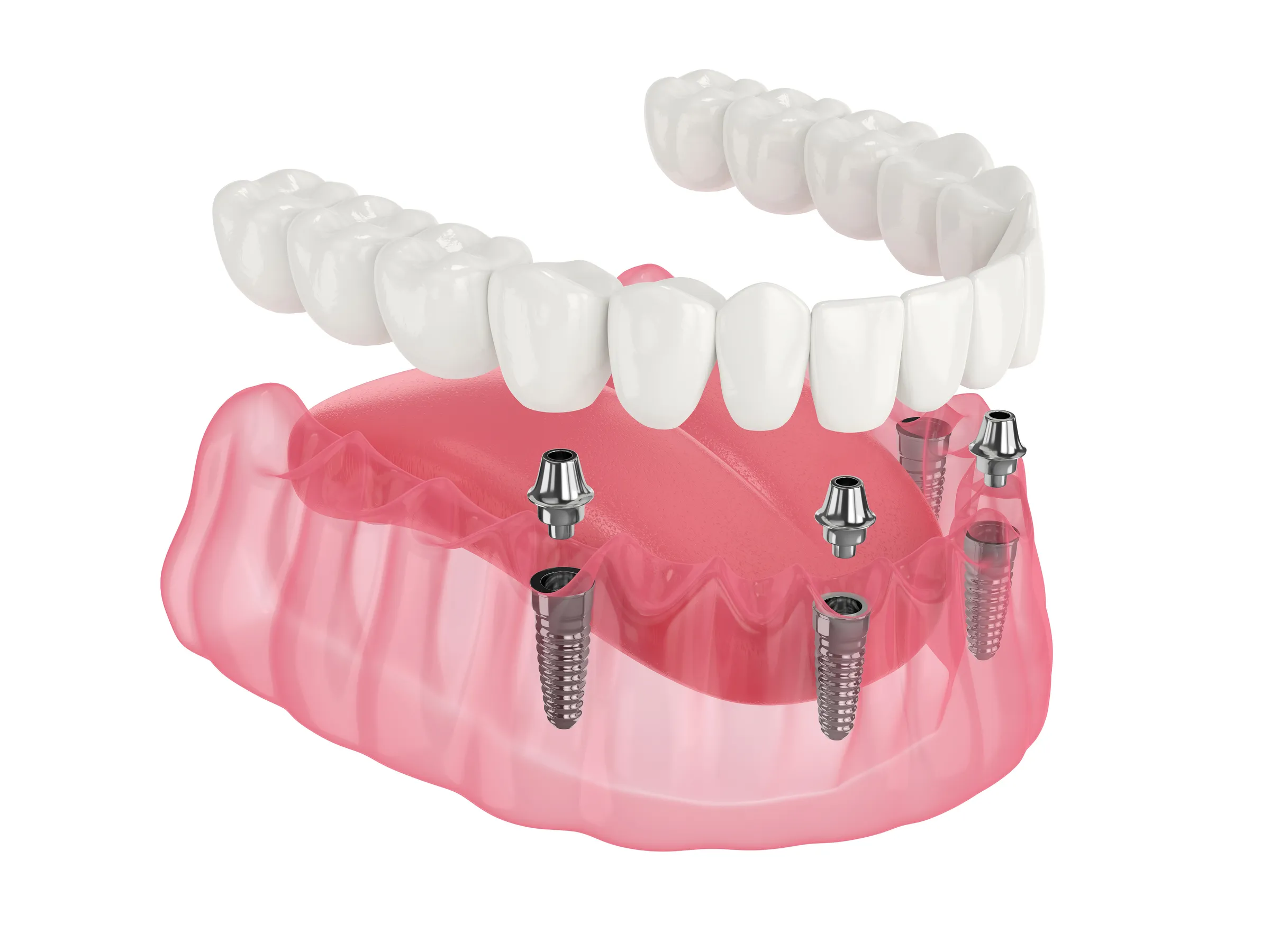
Replace missing teeth. Rebuild your smile.
A fixed arch, anchored by four or six implants
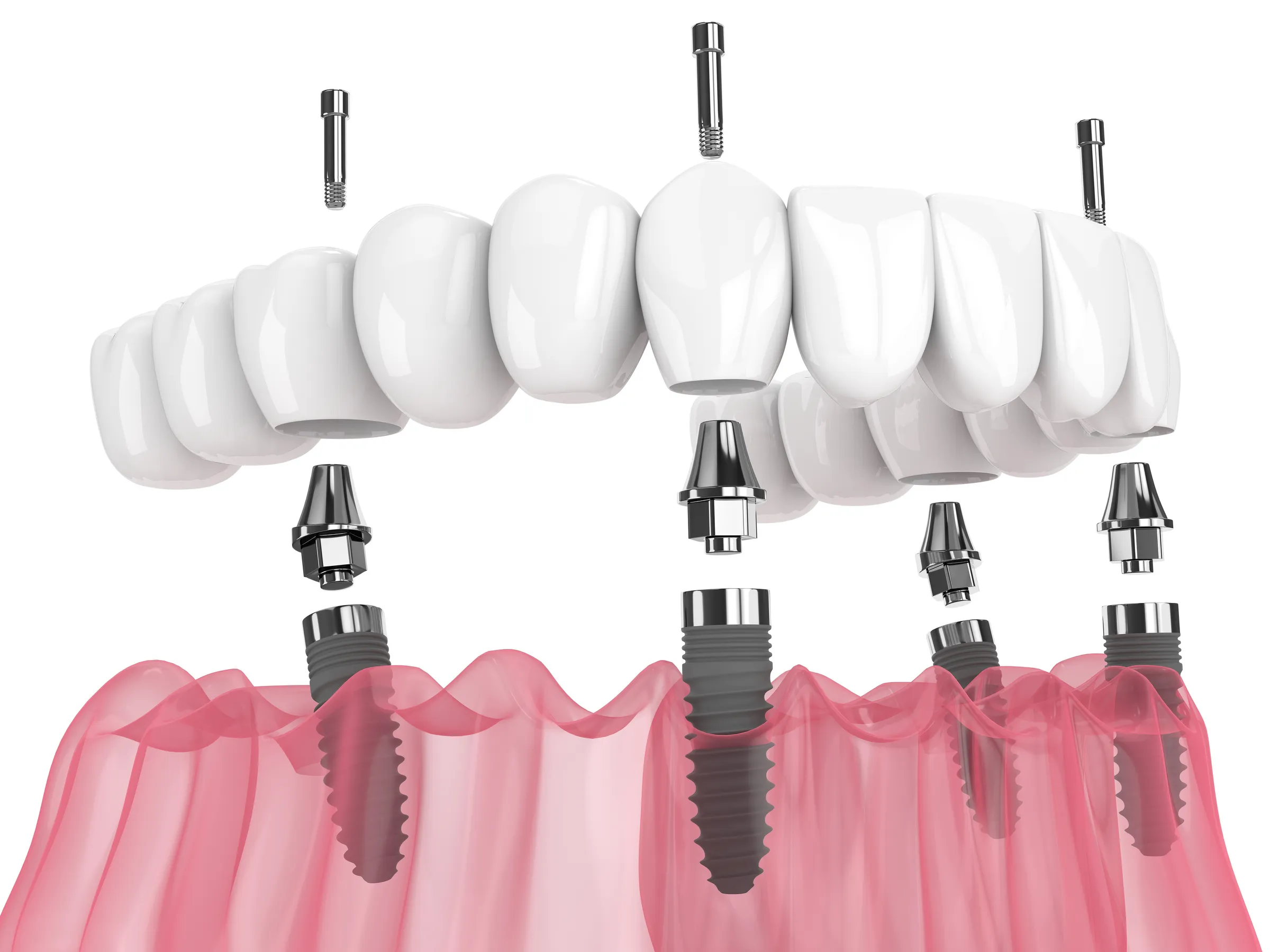
All-on-4 and All-on-6 restore a whole arch of teeth with a fixed bridge that is secured to dental implants rather than resting on the gums. The number in the name is the number of implants that anchor the arch: four in All-on-4 and six in All-on-6. Both are designed for patients who have lost most of their teeth or whose dentures slip, and both stay in place without denture adhesive. Because the bridge is fixed, it does not shift or move the way a removable denture can. A prosthodontist plans where each implant goes and how the new teeth meet, so the arch is designed for a comfortable bite.
All-on-4 and All-on-6 compared
Both options carry a full set of teeth on implants. The difference is how many implants share the work.
- All-on-4Restores a full arch of teeth with only four implants. Using fewer implants reduces the need for bone grafting in many cases.
- All-on-6Six implants anchor the arch for added strength and stability when chewing, giving greater support than removable options and a secure foundation for the full set of teeth.
- The removable alternativeIf you would prefer teeth you can take out, a denture that snaps onto implants is the removable option. Read more about implant-supported dentures.
How the choice between 4 and 6 is made
The choice comes from your 3D CBCT scan, your bite and your goals. The scan gives a three-dimensional view of your jawbone, showing how much bone is available to hold implants and where. All-on-4 reduces the need for bone grafting in many cases, while All-on-6 adds two more implants for extra stability when chewing. If more bone is needed, a sinus lift or bone graft can often rebuild it before the implants are placed. Dr. Incampo explains which number suits your arch and why.
What a fixed arch offers
- Stays putFixed to implants, so it does not shift or move like a removable denture.
- No adhesiveThe arch stays in place without denture adhesive.
- Confident chewingImplant-anchored teeth restore near-natural chewing ability.
- Supports the jawImplants stimulate the jawbone, which helps preserve bone.
Fixed or removable?
A fixed All-on-4 or All-on-6 bridge is attached to the implants and is not taken out at night like a removable denture. An implant-supported denture also anchors to implants, but it snaps on and off. Both are more stable than a traditional denture and need no adhesive, so the choice often comes down to whether you want teeth that stay in or teeth you can remove.
At your All-on-4 or All-on-6 consultation
- Dr. Incampo listens to your goals for your new teeth
- An exam of your teeth, gums, bite and bone
- A 3D CBCT scan to see where implants can be placed
- A recommendation of four or six implants, fixed or removable
- A written estimate before treatment begins
Related treatment
All-on-4 and All-on-6 are two of several full-arch implant options. Learn how dental implants work, see the technology used to plan each arch, or review our payment plans.
The short answer
All-on-4 and All-on-6 replace a full upper or lower arch of teeth with a fixed bridge anchored to four or six dental implants, so the teeth stay in place without denture adhesive and are not removed at night. All-on-4 uses four implants and reduces the need for bone grafting in many cases, while All-on-6 uses six implants for added strength and stability when chewing. The choice is made from a 3D CBCT scan of the jawbone, the bite and the patient’s goals, and a removable implant-supported denture is the alternative.
All-on-4 & All-on-6 FAQ
- What’s the difference between All-on-4 and All-on-6 implants?
- All-on-4 anchors a full arch of teeth to four implants, while All-on-6 uses six. With fewer implants, All-on-4 reduces the need for bone grafting in many cases. The two extra implants in All-on-6 add strength and stability when chewing. Your scan, your bite and your goals guide which one Dr. Incampo recommends.
- Are All-on-4 and All-on-6 teeth fixed or removable?
- All-on-4 and All-on-6 are fixed, meaning the bridge is attached to the implants and does not shift or move like a traditional denture. Because it is fixed in place, you do not take it out at night. If you would prefer a removable option, an implant-supported denture snaps onto implants instead.
- Who is a candidate for All-on-4 or All-on-6?
- Patients who have lost most of the teeth in an arch, or whose dentures slip, may be considered. The main requirements are healthy gums, good overall health and enough jawbone to hold the implants. If bone has been lost, a sinus lift or bone graft can often rebuild it first. A 3D scan and a review of your health history come before any recommendation.
- Do I need a bone graft for All-on-4?
- Not always, because All-on-4 reduces the need for bone grafting in many cases. The 3D CBCT scan shows how much bone is available before treatment is planned. Where bone has been lost, a bone graft or sinus lift can often rebuild it, which adds a healing stage to the plan.
- How do All-on-4 teeth compare with dentures?
- A fixed arch on implants is more stable than a traditional denture and restores near-natural chewing ability. It does not slip, needs no adhesive and is not removed at night. Because the implants stimulate the jawbone, they also help preserve it.
- How do I schedule an All-on-4 or All-on-6 consultation?
- You can book online or call the office to schedule an All-on-4 or All-on-6 consultation. No referral is required. Dr. Incampo examines your teeth, gums and bone, takes a 3D CBCT scan and explains whether four or six implants fit your arch.
Book a visit
Start with a consultation.
Office hours


Google reviews
Insurance & financing
Call with your plan details and we’ll check your benefits and give you a written estimate before treatment begins.
Payment plans and third-party financing are available for routine care and for larger treatment such as dental implants and full mouth reconstruction.