

Dental Implants
Single Tooth Implants in Charleston, SC
Replace one missing tooth without touching its neighbors.
A single implant replaces the root of a missing tooth and supports a crown designed to match the teeth beside it. Dr. Paolo Incampo, a prosthodontist, plans the implant, places it and designs the crown it holds.
Replace missing teeth. Rebuild your smile.
One tooth, restored on its own foundation
When a single tooth is missing, the gap can affect how you chew, how you speak and how comfortable you feel when you smile. A single tooth implant replaces the lost root with a titanium post in the jawbone, then carries a crown that looks, feels and functions like a real tooth. Because the implant stands on its own, the teeth on either side of the gap do not need to be reshaped to hold it. Like a natural root, the implant also stimulates the surrounding bone, which helps protect the jaw where the tooth was lost. Your prosthodontist plans the implant and the crown together, so the new tooth is designed for your bite from the start.
The three parts of a single tooth implant
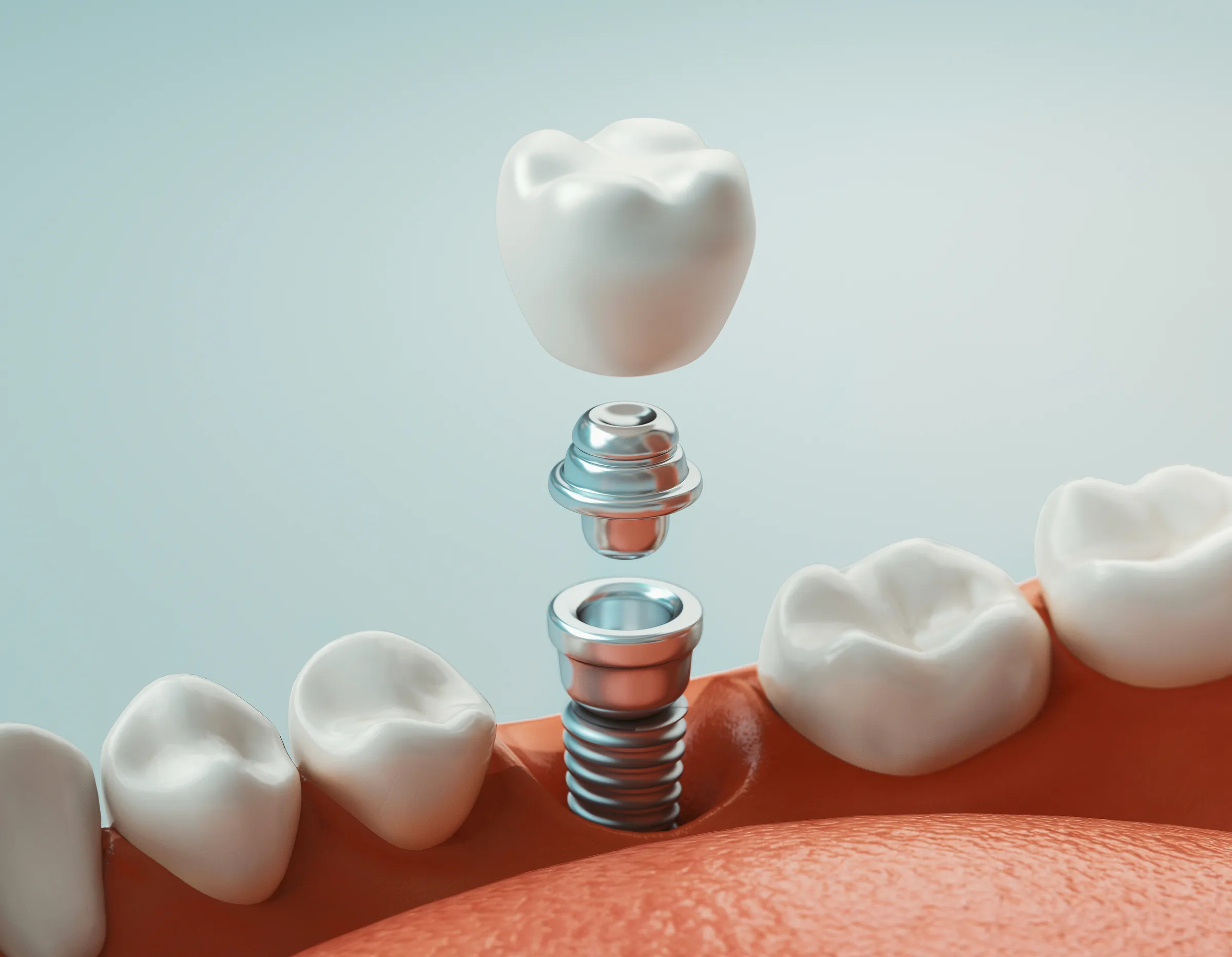
Each single tooth implant is built from three parts that work together as one tooth.
- The implantA small titanium post placed in the jawbone where the tooth root used to be. As it heals, it integrates with the bone and becomes a stable anchor for the new tooth.
- The abutmentA connector that attaches to the top of the implant and holds the crown in position above the gum.
- The crownThe part of the tooth you see: an implant-retained crown that is strong, durable and natural-looking, designed to match your neighboring teeth and fit your bite.
Implant or bridge?
A traditional bridge replaces a missing tooth by placing crowns on the teeth beside the gap and joining a replacement tooth, called a pontic, between them. It restores chewing and keeps the bite stable, but the supporting teeth have to be reshaped to carry it, even when they are healthy. An implant replaces the tooth individually, so nearby teeth are left untouched and the bone under the gap is stimulated. Implants do involve surgery and time for the bone to heal before the crown is placed, while a dental bridge relies on the teeth beside the gap for support. Your consultation sets out both options so you can compare them for your own mouth.
What a single implant protects
- Neighboring teethNo crowns and no reshaping on the healthy teeth beside the gap.
- The jawboneThe implant stimulates bone where the root used to be, helping prevent deterioration.
- Your biteFilling the gap helps keep nearby teeth from drifting out of position.
- Everyday functionThe new tooth looks, feels and functions like a real tooth.
How single tooth implant treatment unfolds
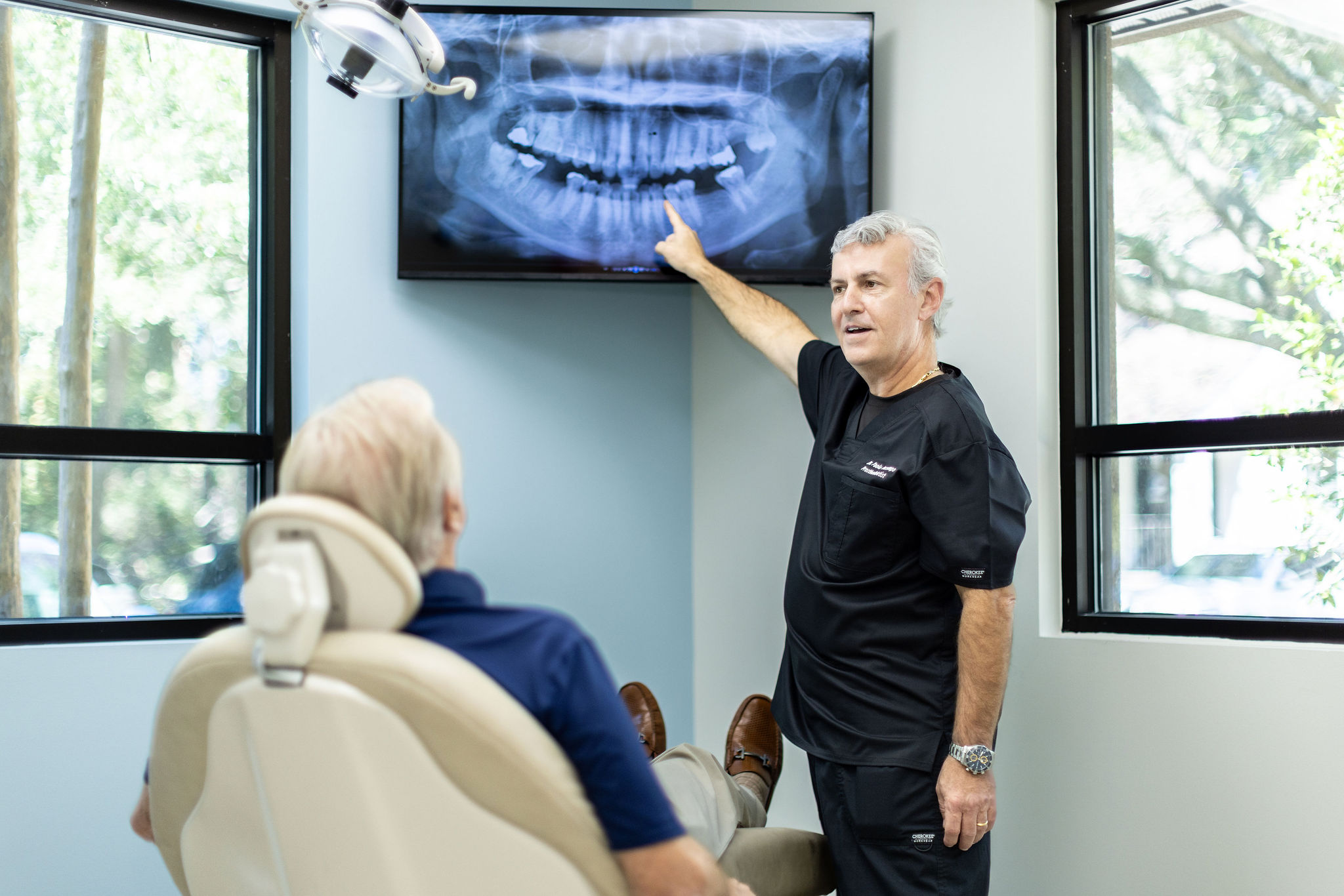
- A consultation, an exam of your teeth and gums, and a 3D CBCT scan
- A written plan and estimate before treatment begins
- Implant placement with the area numbed, and sedation if you feel anxious
- Healing while the implant integrates with the bone
- A custom crown attached and checked against your bite
When the bone needs rebuilding first
Once a tooth is lost, the bone that held it can begin to shrink, and an implant needs enough jawbone to hold it securely. The 3D scan shows how much bone is available before any treatment is planned. If bone has been lost, a bone graft can often rebuild it before the implant is placed, which adds a healing stage to the plan. Healthy gums matter too, so they are checked at your first visit.
Related treatment
A single implant is one of several ways to restore a missing tooth. Learn more about dental implants, see how an implant-retained crown compares with other dental crowns, or read what a prosthodontist does. Financing options are outlined on our payment plans page.
The short answer
A single tooth implant replaces one missing tooth with three parts: a titanium post placed in the jawbone, an abutment that connects to it, and a crown designed to match the neighboring teeth and fit the bite. Because the implant stands on its own, the teeth beside the gap are not reshaped to support it as they would be for a traditional bridge, and the implant stimulates the bone to help prevent shrinkage. Treatment is planned with a 3D CBCT scan, and a bone graft can often rebuild the jaw first if bone has been lost.
Single tooth implants FAQ
- Can an implant replace just one tooth?
- Yes, a single implant topped with a crown replaces one missing tooth without relying on the teeth beside it. The implant takes the place of the lost root, and the crown restores the part of the tooth you see. Because it stands alone, there is no need to reshape the neighboring teeth. The crown is designed to match those teeth and to fit your bite.
- Should I choose an implant or a bridge for one missing tooth?
- It depends on the health of the teeth beside the gap, your jawbone and your preferences, which is why both options are reviewed at your consultation. A bridge relies on crowns placed on the neighboring teeth, while an implant replaces the tooth individually and leaves those teeth alone. An implant also stimulates the jawbone, but it involves surgery and a healing stage before the crown is placed. Dr. Incampo explains how each option would work in your mouth.
- What is an abutment?
- An abutment is the small connector that joins the implant in your jawbone to the crown above the gum. It is attached once the implant has integrated with the bone. The crown is then fixed to the abutment and checked against your bite. Together, the implant, abutment and crown work as a single tooth.
- Will a single implant protect my jawbone?
- Yes, like a natural tooth root, an implant stimulates the jawbone, which helps prevent the bone from shrinking where the tooth was lost. Keeping that bone in place also supports the shape of your face. A gap left open has nothing to stimulate the bone beneath it. If some bone has already been lost, a bone graft can often rebuild it before the implant is placed.
- Does getting a single implant hurt?
- The implant is placed with anesthesia, so the area is numbed during the procedure. Patients usually report minimal discomfort, and any soreness afterward tends to be mild. If dental work makes you anxious, sedation is available. Your care team explains what to expect after your appointment.
- How do I schedule a single tooth implant consultation?
- You can book online or call the office to arrange a single tooth implant consultation. No referral is required. At the visit, Dr. Incampo examines the gap, your neighboring teeth and your gums, and a 3D CBCT scan shows the bone beneath. You then see your options, the steps involved and a written estimate.
Book a visit
Start with a consultation.
Office hours


Google reviews
Insurance & financing
Call with your plan details and we’ll check your benefits and give you a written estimate before treatment begins.
Payment plans and third-party financing are available for routine care and for larger treatment such as dental implants and full mouth reconstruction.